

A biological dentist treats your mouth as part of your whole body, and the first goal is prevention. Sometimes called a holistic dentist, a biological dentist works to keep your teeth healthy enough that you need as little dentistry as possible.
In practice, that means finding the cause of decay and gum disease with tools like bacterial saliva testing, helping early cavities rebuild without a drill, choosing restoration materials your body tolerates well, and removing old mercury fillings under a strict safety protocol.
- Prevention is the goal. The best outcome of biological dentistry is a mouth that needs no dentistry at all.
- It's standard, licensed dentistry. Biological dentists practice it with an extra question in mind: how does this treatment affect the rest of your body?
- The difference shows in materials and conservation. We place metal-free, biocompatible restorations and keep as much healthy tooth as possible.
- Early cavities can be reversed. A stage 1 cavity still contained in the enamel can remineralize, and at Opal, that includes Curodont, a peptide treatment with no drilling.
- Deeper decay needs a restoration. Once the surface breaks or decay reaches the dentin, the tooth needs a filling.
- Old mercury fillings come out safely. We remove them under the SMART protocol, which protects you from mercury vapor.
What does a biological dentist do differently?
A biological dentist asks one extra question before every treatment: what will this do to the rest of your body?
The dentistry itself, including fillings, cleanings, and crowns, is the same licensed profession you already know. The lens is what changes. At my Huntersville dental office, that lens shows up in four concrete ways.
Prevention comes first
The best dentistry is the dentistry you never need, so most of my work goes into keeping your teeth and gums healthy enough to stay out of the chair.
Gum inflammation and oral bacteria are studied in connection with diabetes, heart health, and pregnancy outcomes, which means a healthy mouth protects more than your teeth.
When it helps your care, we coordinate with your physician instead of treating your mouth in isolation.
Diagnostics
We look for causes.
A dental saliva test reads the specific bacteria driving your gum disease or cavity risk, so treatment targets what you're carrying instead of guessing.
Materials
We place metal-free, biocompatible restorations, and we never place mercury amalgam. When a material sits in your mouth 24 hours a day for decades, what it's made of matters.
Conservation
Healthy tooth structure is worth more than anything I can replace it with, so we take away as little as possible and save what nature built.
Biological vs. biomimetic dentistry: what's the difference?
Biological dentistry is a philosophy about materials and whole-body health. Biomimetic dentistry is a restoration technique that rebuilds a damaged tooth to work like a natural one.
The two overlap so often that people use the terms interchangeably, and plenty of biological dentists use biomimetic techniques, but each one answers a different question.
| Biological dentistry | Biomimetic dentistry | |
|---|---|---|
| What it is | A philosophy of care | A restoration technique |
| The question it asks | Is this treatment safe for the whole person? | Can this repair flex and function like a real tooth? |
| Main focus | Prevention, biocompatible materials, and whole-body health | Rebuilding damaged teeth with layered adhesive restorations |
| Where you see it | Metal-free fillings, saliva testing, SMART mercury removal | Conservative repairs designed to avoid crowns and root canals |
Biomimetic dentistry does have downsides. Appointments take longer because layered adhesive restorations are slower to place than a standard filling, and the up-front cost is usually higher for the same reason.
Fewer dentists offer it, since the technique requires additional training beyond dental school. What you get for that trade is a repair designed to preserve tooth structure and keep teeth off the crown-and-root-canal treadmill.
How do biological dentists treat cavities?
We treat the cause and the risk first, then repair the tooth with conservative, biocompatible restorations when it needs one.
A cavity is the symptom of a bacterial process, and filling the hole without touching the process is how patients end up with a new filling every year. Here's what that looks like in my Huntersville practice:
- Find out why you're decaying. Diet, dry mouth, and your specific bacterial load all drive cavities. A saliva test shows whether cavity-causing strains are elevated, and by how much.
- Catch lesions early and help them rebuild. Early-stage decay can often be reversed without a drill, with remineralizing toothpaste at home and Curodont in the office. More on both below.
- Restore conservatively when needed. When a cavity does need a filling, we remove the decay, keep the healthy structure, and rebuild with metal-free composite under proper isolation.
Can a stage 1 cavity be reversed?
Yes. A stage 1 cavity, meaning decay still contained within the enamel with no hole in the surface, can remineralize and reverse.
Enamel loses minerals under acid attack and rebuilds itself when the attack stops and minerals are available. The National Institute of Dental and Craniofacial Research describes this back-and-forth as the tooth decay process, and it runs in both directions at the early stage.
Remineralization has real research behind it.
Fluoride is the most studied tool, and in a randomized in situ study in BDJ Open, a 10% hydroxyapatite toothpaste matched a 500 ppm fluoride toothpaste for remineralizing early caries and preventing demineralization.
A 2025 systematic review reached a similar conclusion for hydroxyapatite-based, fluoride-free toothpastes on initial lesions.
That evidence matters in a fluoride-optional practice like mine, because it means patients who prefer a fluoride-free route still have a well-supported way to remineralize.
Patients who choose fluoride get it as an informed decision rather than a default.
How does Curodont treat early cavities?
Curodont is a peptide treatment from vVARDIS that helps early cavities and white spot lesions rebuild in the office, with no drilling and no numbing. I now use it at Opal for lesions that are still contained in the enamel.
The peptide soaks into the enamel and forms a scaffold inside the lesion, and the tooth rebuilds on that scaffold using the calcium and phosphate already in your saliva. The application takes a few minutes, and you skip food and drinks for 30 minutes afterward.
A 2023 systematic review in the Journal of the American Dental Association found the self-assembling peptide arrested early caries lesions and reduced their progression toward cavitation.
Curodont works on early lesions only. Once a tooth has an actual hole, it still needs a filling, which is why early detection matters so much.
When is it too late to remineralize a cavity?
Once the enamel surface breaks open, or decay reaches the softer dentin layer underneath, remineralization can no longer rebuild the tooth.
At that point, the best option is a small, conservative restoration now, so it never becomes a crown or a root canal later. The earlier we catch a lesion, the more choices you keep, which is exactly why we lean so hard on early detection and risk testing.
What is safe mercury filling removal?
SMART stands for Safe Mercury Amalgam Removal Technique, a protocol developed by the International Academy of Oral Medicine and Toxicology to protect you from mercury vapor while an old amalgam filling comes out.
Removing an amalgam filling releases mercury vapor, and the protocol keeps that vapor out of your lungs and ours. Under SMART:
- The tooth is isolated with a non-latex dam
- You breathe protected air through your nose
- A high-volume suction sits right at the source
- The room air is filtered
- The filling is sectioned and removed in large chunks with constant water spray instead of being ground away
A mercury-safe dentist does not pressure you to remove fillings because they're metal. Intact amalgam can stay right where it is.
Removal makes sense when a filling is failing, when the tooth underneath is cracking, or when you've decided you want it out after an informed conversation. The protocol is about doing it safely when it's done at all.
Frequently asked questions
What are the downsides of biomimetic dentistry?
Longer appointments, higher up-front cost than a conventional filling, and fewer trained providers. Layered adhesive restorations take time and skill to place, and insurance plans price against the standard version. In exchange, the repair conserves healthy tooth structure and is designed to reduce the need for crowns and root canals down the road.
How do biological dentists treat cavities?
By treating cause and damage together. That means identifying why decay is active, often with bacterial saliva testing, helping early lesions remineralize before they need a drill, and restoring true cavities with conservative, metal-free, biocompatible fillings. Mercury amalgam is never placed.
Can a stage 1 cavity be reversed?
Yes. Decay that's still contained within the enamel, with no break in the surface, can remineralize. Hydroxyapatite or fluoride toothpaste, a lower-sugar diet, addressing your bacterial load, and in-office treatment with Curodont all push the tooth back toward repair. Regular checkups matter here, because stage 1 cavities rarely hurt and are easy to miss.
What is Curodont?
Curodont is a self-assembling peptide treatment for early cavities and white spot lesions. It forms a scaffold inside the enamel that helps the tooth rebuild with minerals from your saliva. The application takes a few minutes with no drilling or numbing, and it works on early lesions only.
When is it too late to remineralize a cavity?
Once the surface has broken open or decay has reached the dentin under the enamel. From that point, the cavity only grows, and a small restoration is the most conservative option left. Caught early, it stays a five-minute conversation instead of a procedure.
About the Author

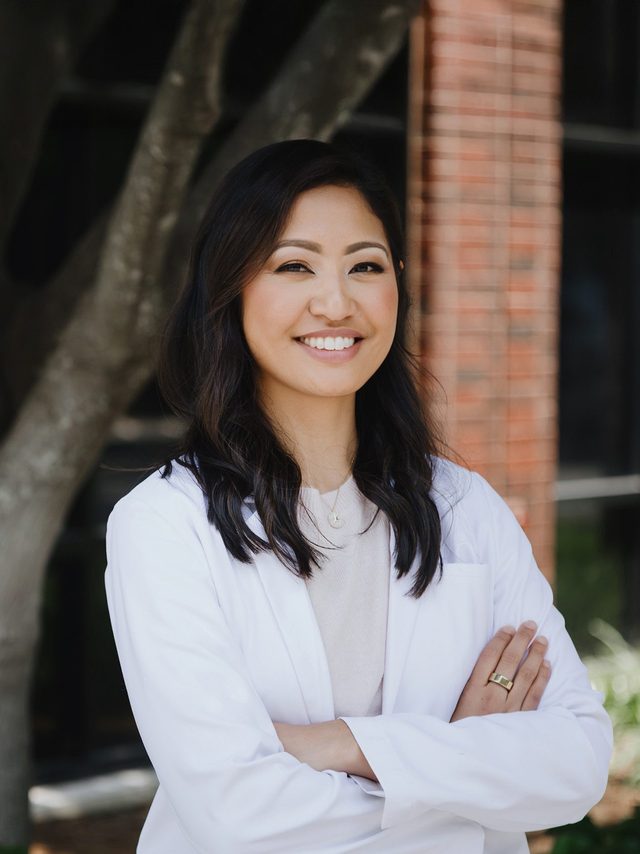
Dr. Abbey Gonzales, DDS, earned her Doctor of Dental Surgery from the University of North Carolina School of Dentistry and holds a Master of Arts in Intercultural Healthcare from Wake Forest University. She continues advanced training through the Kois Center and practices at Opal Dental Studio in Huntersville, NC, where she focuses on patient education and helping people take ownership of their oral health.
Looking for a biological dentist in Huntersville, NC?
If this approach to dentistry sounds like what you've been looking for, we'd love to meet you. Opal Dental Studio is a family-owned biological dental studio in downtown Huntersville, NC, serving Cornelius, Davidson, and the Lake Norman area.
Opal Dental Studio: 403 Gilead Rd, Suite M, Huntersville, NC 28078
Book a Visit