



Start my smile experience
Please do not use this form to send health information.
Oops! Something went wrong while submitting the form.
When a tooth is cracked, worn, or breaking down, a custom crown can fully cover and protect it — so you can chew comfortably again.
A dental crown is a custom-made restoration that fully covers a tooth weakened by decay, cracks, or previous dental work. At Opal Dental Studio, Dr. Gonzales plans every crown around how the tooth functions in your bite, not just how it looks.



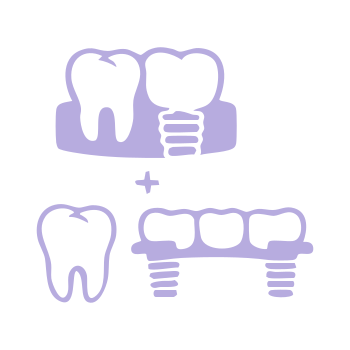
Some teeth reach a point where repairs are proportionally larger than the natural tooth remaining. A tooth may feel unstable, react when you bite, or need dental work again and again in the same spot. That’s often when a crown becomes the most predictable way to protect it.
A crown is commonly recommended when there’s:
A crown fully covers and reinforces the tooth, helping it handle daily chewing forces again and reducing the risk of further fracture or compromise.
If a tooth no longer feels healthy or stable, tell us. Book a no-pressure visit — Dr. Gonzales will evaluate what’s happening and walk you through the options that best support the tooth long-term.
A crown is only as good as the planning behind it. Patients across Huntersville, Charlotte, and the Lake Norman community choose Opal Dental Studio because Dr. Gonzales plans restorative care with the whole mouth in mind.
We focus on preserving healthy tooth structure and function for longevity. Restorative decisions are based on what the tooth needs to stay stable in balance with the mouth, not on doing more than necessary.
Dr. Gonzales completed advanced training through the Kois Center, where planning centers on function, wear, and long-term stability. Each crown is planned around the condition of the tooth and how it functions in your bite. Before recommending treatment, she takes the time to evaluate:

A crown should feel right when you chew and blend naturally with surrounding teeth. Strength and comfort come first, with appearance thoughtfully addressed as part of the plan. Digital photos and scans support bite-aware precision at every step.
Patients value visits that feel prepared and well-coordinated. Clear communication and efficient workflows help appointments run smoothly from start to finish.
As a local practice, we care for patients from Huntersville, Charlotte, and throughout the Lake Norman community. That long-term relationship matters when planning restorative care you can rely on.
Many Huntersville patients come in feeling nervous, and we take that seriously. Dr. Gonzales is known for her gentle chairside manner and for taking the time to explain each step before anything begins.
At Opal Dental Studio, relationships come first. When you come in for restorative care, you work directly with Dr. Gonzales, not a rotating team of providers.
Our team takes a “we guide, you decide” approach, giving you clear information and the space to make decisions that feel right for you.
A crown covers the whole tooth, creating a protective shell around it. By fully encasing the tooth, a crown helps hold weakened structure together and manage chewing forces across all sides.
Fillings, onlays, and crowns are chosen based on how much of the tooth needs reinforcement and how the tooth functions when you bite and chew. A crown is selected when full coverage offers the most predictable outcome for that tooth — not because it’s the most aggressive choice. When damage is limited and the surrounding structure remains strong, a filling or onlay may still be the better call.
One of the most common questions we hear is whether a crown can look natural. The answer depends on the material and how it’s chosen for your specific tooth. There isn’t a single material that works best for everyone — Dr. Gonzales looks at tooth location, preparation style, bite dynamics, and cosmetic priorities, then recommends the option that fits.
If you’re considering a dental crown, it helps to know how the process works and what decisions are made along the way. At Opal Dental Studio, we focus on planning the crown around how your tooth functions, not just how it looks.
We start by evaluating the tooth and how it fits into your overall bite — this first step guides every decision that follows. We look at fracture lines or hidden cracks, the stability of existing fillings, chewing forces and pressure points, and grinding or clenching patterns that may affect the crown. Understanding these details upfront tells us whether a crown is the right solution and how to design it for long-term support.
We numb the area first to keep you comfortable. Dr. Gonzales then reshapes only what’s necessary, removing damaged areas while preserving as much healthy tooth structure as possible. A digital scan or impression records the exact shape of the tooth and how it fits into your bite, so the crown is designed for proper fit, function, and comfort.
We partner with leading labs to manufacture the crown. In the meantime, a temporary crown covers the prepared tooth and protects it between visits — keeping the area comfortable, supporting normal chewing, and helping your bite stay in the right position. We’ll also go over a few simple care tips so the temporary stays secure until your next appointment.
When your crown is ready, we carefully place it and secure it to the tooth, then check how it fits against the surrounding teeth and how it feels when you bite and chew. Small adjustments are made as needed so the bite feels balanced and natural. Before you leave, we smooth and polish the crown and confirm everything feels comfortable.
We numb the area before starting, so you shouldn’t feel pain during the procedure — most people notice pressure or movement rather than discomfort. Afterward, mild sensitivity to temperature or pressure can occur as the tooth settles and recovers. This usually improves as the area adjusts. If sensitivity feels sharp, worsens, or doesn’t improve, let us know so we can take a look.
A few simple habits that help:
If dental visits make you uneasy, let us know. We offer comfort options, including a benzodiazepine prescription when appropriate, and we adjust the visit to what helps — taking breaks, explaining each step as we go, or moving at a pace that feels manageable. Small adjustments can make a big difference, especially early on.
Crowns aren’t built around a fixed timeline. Longevity depends on material choice and how it matches the tooth’s role, how bite forces are distributed when you chew, grinding or clenching habits (especially at night), daily hygiene at the crown’s margins, and regular checkups where small issues — like early decay around the edges — can be caught early. When these factors are addressed, a crown can remain stable and functional for many years.
For patients who grind or clench, a night guard may be recommended to help protect the crown and the surrounding teeth from excess force.
Some teeth reach a point where protection matters more than patching. What the tooth needs depends on how much healthy structure remains and how it functions when you bite and chew — far more than how it looks.
If a crown isn’t the best option today, Dr. Gonzales will explain what the tooth actually needs and why — whether that’s a filling, an onlay, or treatment to get the tooth healthy first.
Answer two quick questions and see whether a crown is likely a fit, in about a minute.
Someone from our office will review your details and call you. Please don't include sensitive health details here.
Every visit has a story. These are about trust, care, and the people behind the smiles.
Questions about cost are a normal part of planning restorative care. We aim to make the financial side clear before treatment begins — without surprises or pressure. Here’s how insurance works at Opal, plus financing and our Dental Wellness Plan for patients without traditional coverage.
Can reduce the cost of ongoing care, especially for patients without traditional insurance.
See Our Wellness PlanA dental crown is a custom-made restoration that fully covers a tooth. It’s designed to protect a tooth that’s been weakened by decay, cracks, or previous dental work.
That depends on how much healthy tooth structure remains. Smaller areas of damage may be treated with a filling, while teeth that need more support often benefit from a crown.
Crowns typically require more than one visit. One appointment focuses on evaluation and preparation, and another is used to place and adjust the final crown.
The tooth is numbed during treatment, so pain isn’t expected. Some mild sensitivity afterward is normal and usually improves as the tooth recovers.
There’s no single timeline. Longevity depends on factors like bite forces, material choice, oral hygiene, and regular dental checkups.
Crowns are designed to stay secure, but they can come loose in some situations. If this happens, contact us so we can evaluate the tooth and reattach or replace the crown if needed.
If a temporary crown comes off, call us as soon as possible. We’ll let you know how to protect the tooth and arrange for it to be addressed.
Yes. Many crowns are tooth-colored and designed to blend in with surrounding teeth. Material selection plays a big role in appearance.
Crowns do not whiten the same way natural teeth do. If shade matching is a concern, we can discuss teeth whitening options before placing the crown.
Coverage varies by plan. We file insurance on your behalf and review expected benefits with you before treatment.
In many cases, yes. Chewing teeth that have had root canal treatment often benefit from a crown to restore strength and protect the tooth.
Teeth can change over time. If additional treatment becomes necessary, we’ll explain why and guide you through the next steps calmly and clearly.
Cost depends on the material, the condition of the tooth, and whether other treatment is needed first, so the only accurate number comes from an exam. We estimate coverage and file insurance claims on your behalf, CareCredit financing is available, and our Dental Wellness Plan offers savings on restorative treatment for patients without traditional insurance.
If you have a cracked tooth, a filling that keeps failing, or a crown that no longer feels right, the next step is clarity. We’ll examine the tooth, confirm what’s happening, and recommend the most predictable way to protect it.
Please do not use this form to send health information.