




Start my smile experience
Please do not use this form to send health information.
Oops! Something went wrong while submitting the form.
Missing a tooth is more than a cosmetic gap. A dental bridge can restore your bite and help your smile feel whole again.
A dental bridge replaces a missing tooth by anchoring to the teeth next to the gap, so the space is restored without surgery. At Opal Dental Studio, Dr. Gonzales plans every bridge around how your bite works, not just how the gap looks.


Most people don’t think about replacing a tooth until the gap starts affecting everyday things. Chewing feels off, food keeps getting stuck, or the space is causing the neighboring teeth to feel sore. That’s often when a dental bridge may become a practical next step.
A bridge is commonly considered when:
These signs help guide the conversation, but they don’t decide the plan on their own. Dr. Gonzales will evaluate the gap, the supporting teeth, and how your bite is working, then walk you through options that make sense for your situation.
Not sure if a bridge is right for you? Book a no-pressure visit with Dr. Gonzales. We will look at what is going on, talk through your options, and help you choose what feels right for you.
Replacing a tooth is a long-term decision. Patients across Huntersville and the Lake Norman area choose Opal Dental Studio because Dr. Gonzales plans tooth replacement around how your bite works, not just how the gap looks.
Tooth replacement starts with how your bite works, not just how the gap looks. Dr. Gonzales completed advanced training through the Kois Center, where planning centers on function, wear, and long-term stability. Planning for a bridge focuses on:

Options are compared thoughtfully, starting with what preserves healthy teeth and supports the area without unnecessary steps. We only recommend what is necessary and clinically appropriate — if a different option would serve your gap better than a bridge, you’ll hear that first.
Each restoration is checked and refined so chewing feels balanced and natural, not forced. Digital scans capture precise details for fit and bite, and the final bridge is adjusted and polished until it feels comfortable.
You’ll know how to care for your bridge and what to watch over time so results stay comfortable. That includes how to clean under the bridge, what bite changes to look out for, and when to check in with us.
Many Huntersville patients come in feeling nervous, and we take that seriously. Dr. Gonzales is known for her gentle chairside manner and for taking the time to explain each step before anything begins.
At Opal Dental Studio, relationships come first. Patients value consistent care and honest recommendations built around long-term relationships — when you come in, you work directly with Dr. Gonzales, not a rotating team of providers.
Our team takes a “we guide, you decide” approach, giving you clear information and the space to make decisions that feel right for you.
A dental bridge replaces a missing tooth by anchoring to the teeth next to the gap. Those neighboring teeth typically support the replacement tooth through crowns, allowing the space to be restored without surgery.
Bridges can be a practical choice when the surrounding teeth already need support, or when you want a fixed solution without waiting for implant treatment. Common tooth-colored materials include porcelain and zirconia-based options for added strength — designed to blend with surrounding teeth when carefully planned and fitted.
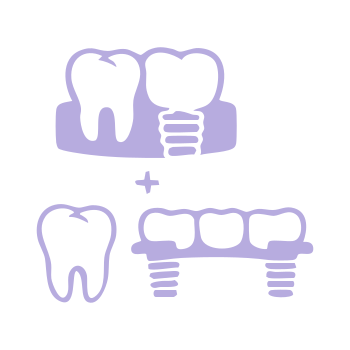
Several types of dental bridges are used, depending on the location of the gap and the amount of support the surrounding teeth can provide. Dr. Gonzales looks at your gap and supporting teeth first, then walks you through the reasoning.
A bridge works best when there’s a clear plan from the start. Dr. Gonzales walks you through each step so you know what’s happening, why it matters, and what to expect along the way.
We begin by evaluating the gap and the teeth that will support the bridge. This includes checking the health of the supporting teeth, gum and bone stability around the area, bite forces and wear patterns, and space, alignment, and overall appearance. This information guides how the bridge should be designed and whether it’s the right option.
Once a bridge is part of the plan, we prepare the supporting teeth. The area is numbed for comfort, shaping is kept as conservative as possible, and a digital scan or impression captures precise details for fit and bite.
We place a temporary bridge while the final one is being made. This step supports the toothless area after an extraction, protects the prepared teeth, maintains proper spacing, and keeps chewing comfortable.
When the bridge is ready, we secure it in place and carefully check how it fits. We confirm overall fit, adjust the bite so it feels balanced, then polish and confirm comfort.
We numb the area during treatment, so pain isn’t expected while the bridge is being placed — patients notice pressure rather than discomfort. Afterward, mild sensitivity or soreness can happen as the teeth adjust. This typically settles as you recover, the bite evens out, and the surrounding tissues calm down.
What keeps a bridge comfortable for years:
Your bridge should feel balanced once everything has settled. If the bite feels high, something feels sharp, or sensitivity increases rather than improves, that’s a sign to check in with us so we can make adjustments.
When you’re deciding how to replace a missing tooth, the best option depends on how the gap affects your bite, the health of nearby teeth, and what fits your goals right now.
A dental implant may be a better fit when:
A removable option may be useful in certain situations, such as:
We only recommend what is necessary and clinically appropriate. If you were told there is only one option, ask us to compare bridge, implant, and removable choices for your specific gap.
A bridge leans on the teeth around the gap, so the health of those supporting teeth, your bite forces, and your daily cleaning habits matter far more than the gap itself.
If a bridge isn't the best option today, Dr. Gonzales will explain what should come first and why — and compare bridge, implant, and removable choices for your specific gap.
Answer two quick questions and see whether a dental bridge is likely a fit, in about a minute.
Someone from our office will review your details and call you. Please don't include sensitive health details here.
Every visit has a story. These are about trust, care, and the people behind the smiles.
Questions about cost are a normal part of planning tooth replacement. Our goal is to make the financial side clear before treatment begins, without surprises or pressure — here’s how insurance works at Opal, plus financing and our Dental Wellness Plan.
Can reduce the cost of ongoing care, especially for patients without traditional insurance.
See Our Wellness PlanA dental bridge replaces a missing tooth by spanning the gap and anchoring to supporting teeth or implants.
It depends on the health of nearby teeth, bone support, and timing. We’ll compare both options for your specific situation.
Most bridges are completed over a few visits, including planning, preparation, and final placement.
Longevity depends on fit, bite forces, daily cleaning, and regular exams rather than a fixed timeline.
The area is numbed during treatment. Pressure is normal, and mild sensitivity can happen as things settle.
Yes. Many bridges use porcelain materials designed to blend with surrounding teeth.
No. Whitening products do not change the color of bridge materials. Shade is selected during planning.
A Maryland bridge attaches to neighboring teeth with a bonded framework rather than full crowns and is typically best suited for front teeth with lighter bite forces.
In some cases, yes. The decision depends on the length of the span and the strength of the supporting teeth.
Cleaning requires special flossing tools or a water flosser to keep the area under the bridge free of buildup.
Regular exams help catch issues early. If a problem develops, we’ll discuss repair or replacement options.
Coverage varies by plan. We can estimate benefits and file claims when applicable.
Cost depends on the type of bridge, the materials used, and the condition of the supporting teeth, so the only accurate number comes from a consultation. Opal is out of network, files insurance as a courtesy, and offers Cherry & CareCredit financing and a Dental Wellness Plan.
If you have a missing tooth and the gap is starting to affect how you chew, speak, or smile, we’ll evaluate the area and help you choose the right way to restore it. The first step is just a conversation.
Please do not use this form to send health information.