

Quick answer: Whether TMJ can be cured permanently depends on what's driving yours. Muscle-driven TMJ pain, which is the most common kind, often resolves completely with conservative care and stays gone. TMJ problems rooted in the joint itself, like disc displacement or arthritis, are usually managed rather than cured, and when managed well, they can stay comfortable for life. TMJ symptoms sometimes go away without any treatment at all.
- "TMJ" covers several different disorders, and the cause decides the outcome. Muscle problems have the best odds of a full, lasting recovery.
- Most people improve with conservative care: exercises, heat and cold, a softer diet, habit changes, and a custom night guard when grinding is involved.
- Damage to muscles reverses. Structural changes inside the joint, like a worn disc, don't rebuild themselves, though the joint often adapts and stops hurting.
- Anyone promising a guaranteed permanent cure is selling something. The field's own escalation path runs from reversible treatments to surgery as a careful last resort.
- The fastest route to a lasting result is finding out which type of TMD you have, since the treatment that fixes one type does little for another.
Is TMJ curable permanently?
For many people yes, and the deciding factor is whether your problem lives in the muscles or in the joint.
Most TMJ pain comes from the chewing muscles. Clenching, grinding, stress, and posture overwork them until they ache, refer pain to the ear and temple, and make the jaw feel tight.
Muscle problems respond well to treatment. When the habits driving them change, the pain can resolve and never come back. That's a real cure by any practical definition.
The TMJ Association reports that most people have mild or periodic symptoms that improve within weeks or months with simple home care.
Joint-based TMD is a different conversation. When the cushioning disc inside the joint has slipped, or the joint surfaces show arthritic wear, treatment aims to relieve pain, restore function, and protect the joint from further damage.
Plenty of my patients with disc problems live without pain, and I'd describe them as well-managed rather than cured. The distinction matters because chasing a "permanent cure" for a structural problem is how people end up with aggressive, irreversible treatment they didn't need.
How do I fix my TMJ myself?
Start with four weeks of consistent self-care: daily jaw exercises, heat or cold, a softer diet, and dropping the habits that overwork the joint.
Mayo Clinic recommends applying heat or cold for 15 to 20 minutes several times a day, and pairing it with gentle stretching. The full routine I give my patients, with step-by-step instructions, is in my guide to TMJ exercises.
Alongside the exercises, lower the frequency of hard and chewy foods in your diet temporarily, starting small and working up towards your normal diet; avoid wide yawns; and catch yourself clenching during the day. Your teeth should only touch when you chew and swallow.
Stress management belongs on this list too, since for many people the jaw is where stress physically lands.
Give the routine a fair trial. If four to six weeks of real consistency hasn't moved your pain, or your symptoms include locking or painful clicking, self-care has told you what it can, and it's time for a diagnosis.
What TMJ treatment looks like when home care isn't enough
Professional TMJ treatment runs on an escalation ladder. Here's the sequence of treatment, from least invasive to most:
- Diagnosis first. An exam of your joint, muscles, and bite sorts muscle-driven pain from joint problems. Everything after this step depends on getting it right.
- A custom night guard. If you grind or clench in your sleep, a properly fitted oral appliance protects the joint and breaks the overnight cycle that feeds daytime pain.
- Physical therapy. A therapist trained in jaw work combines targeted exercises with treatments like ultrasound and addresses the neck posture that loads the jaw.
- Short-term medication. Anti-inflammatories, muscle relaxants, or low-dose tricyclic antidepressants can calm a flare while the structural work takes hold.
- Minimally invasive procedures. For stubborn joint problems, options include arthrocentesis, which flushes the joint with fluid, injections, and arthroscopy.
- Open-joint surgery, rarely. Mayo Clinic's own guidance urges patients to think about this option very carefully, since it carries more risk than everything above it. Surgery has a place for severe structural damage, and that place is last.
Notice how much of that list is reversible. That ordering is deliberate across the whole field, and it's a useful filter when you're evaluating any provider's recommendation.
Can TMJ damage be reversed?
Muscle damage reverses fully. Structural damage inside the joint doesn't grow back, and the joint can still adapt enough to work comfortably.
Overworked jaw muscles behave like any other strained muscle: rest them, retrain them, remove what was irritating them, and they recover completely.
A displaced disc or worn cartilage is different, since the body doesn't regenerate that tissue. What the joint can do is adapt. Many discs stop causing pain even without returning to perfect position, and treatment protects the joint so the adaptation happens with less wear along the way.
This is the strongest argument for treating TMJ early. Pain that's been around a few weeks is usually still a muscle problem. Pain that's been ignored for years has had time to change the joint itself, and that shrinks the list of good options.
Frequently asked questions
How do I fix my TMJ myself?
Do daily jaw exercises, apply heat or cold for 15 to 20 minutes several times a day, eat softer foods, and stop gum, wide yawns, and daytime clenching. Most mild TMJ improves within weeks on this routine. If a month of consistent effort hasn't helped, get an exam.
Can TMJ damage be reversed?
Muscle-related damage reverses completely with treatment. Structural changes like disc displacement or arthritic wear are permanent, though the joint often adapts well enough to function without pain, especially when treatment starts early.
Is TMJ curable permanently?
Muscle-driven TMJ, the most common type, can resolve permanently once the muscles calm down and the habits behind the problem change. Joint-based TMJ is managed rather than cured, and good management can mean years without symptoms.
Can you get rid of TMJ completely?
Many people do. The odds are best when the cause is muscular, treatment starts early, and the plan addresses why the problem started, whether that's grinding, stress, posture, or bite issues. A guaranteed permanent cure doesn't exist for every case, and lasting comfort is a realistic goal for most.
About the Author

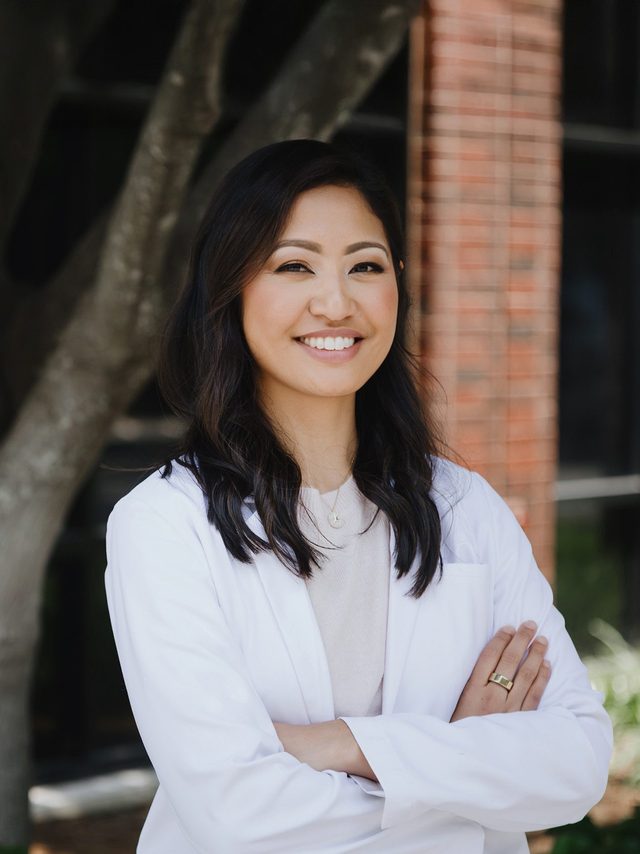
Dr. Abbey Gonzales is the owner and founder of Opal Dental Studio in Huntersville, North Carolina. She earned her Doctor of Dental Surgery from the UNC School of Dentistry after first completing a Master of Arts in Intercultural Healthcare at Wake Forest University and serving as a Public Health Fellow. She is a graduate of the Kois Center and imPRES-trained in advanced esthetic dentistry, with a clinical focus on consent-based, biocompatible care and strong attention to TMJ, airway screening, and minimally invasive treatment.
Before dentistry, she trained as a linguist and is fluent in Tagalog, Spanish, and English. Her path to dental school was personal: her mother immigrated from the Philippines and lost most of her teeth by age 20, then made it her mission that her daughter would keep every one of hers.
Outside the office, Dr. Gonzales is an Ironman athlete and marathon runner, a serious foodie, a traveler, and a pianist — you might catch her cycling through downtown Huntersville before or after a clinic day.
Ready to find out what's driving your jaw pain?
The permanent-cure question has a different answer for every jaw, and yours starts with a diagnosis. Opal Dental Studio is a biological dental studio in downtown Huntersville, NC, serving Cornelius, Davidson, and the Lake Norman area. Book a visit and we'll examine your joint, muscles, and bite, then build a plan that starts with the most conservative option likely to work.
Book a Visit